

The Dordogne valley feels like it belongs to another time. Hills roll like sleeping giants, rivers run slow and dark beneath old stone bridges, and cliffs seem hollowed out with secrets.
There’s something about this place — earthy, quiet, almost prehistoric — that stays with you.
Among its treasures, none is more haunting than Lascaux.
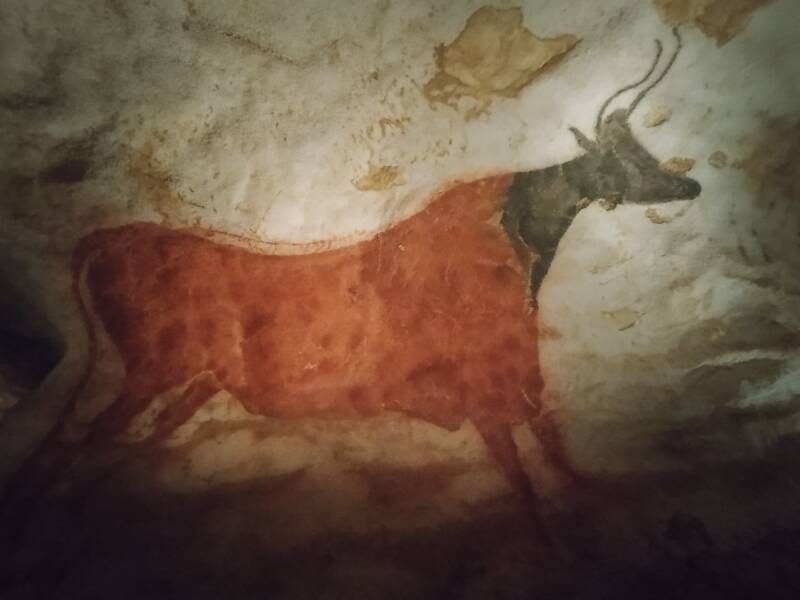
The original Caves of Lascaux were discovered by chance in 1940, they revealed hundreds of prehistoric paintings — vivid animals, hand signs, mysterious symbols — drawn by humans more than 17,000 years ago.
But after only two decades of visitors, in 1963 the cave was permanently closed to protect its delicate climate. Mold and algae had already started threatening the images.
Instead of giving up access, France did something bold. They built a replica. And not just any replica — a stunning blend of science, precision, and architectural vision.
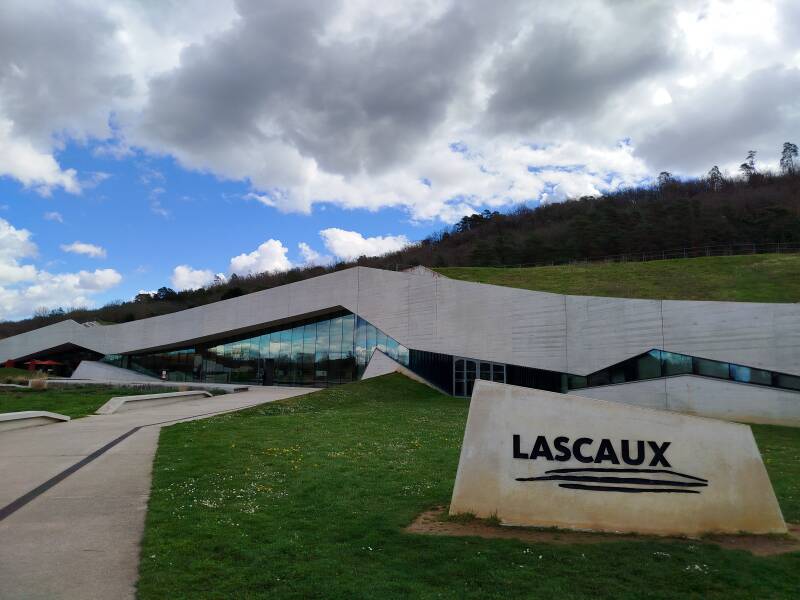
Lascaux IV, opened in 2016, is housed in a low-slung, modern concrete building that almost disappears into the hillside. The design, by Snøhetta, echoes the surrounding landscape while gently nodding to the futuristic. I love when ancient and modern meet like this.
Inside, the replica cave is precise down to the millimeter. Colors, textures, even imperfections are exactly recreated using digital scans, handcrafted molds, and pigment techniques that mirror the originals.
And on the day I went — no school classes, no tour groups — it felt as if the cave had opened just for me.

It was quiet. The air inside was cool and clean, not heavy — almost neutral, like a resting breath. And though I knew I wasn’t in the “real” Lascaux, it felt more real than I expected — and genuinely impressive. The paintings are extraordinary. Deer, bulls, horses, bears — some galloping, others standing still, their forms vivid and expressive. The ochre and black still burn with color, thousands of years later.
After the cave walk, you’re guided into the museum: a contemporary wing that gives context to everything you just saw.
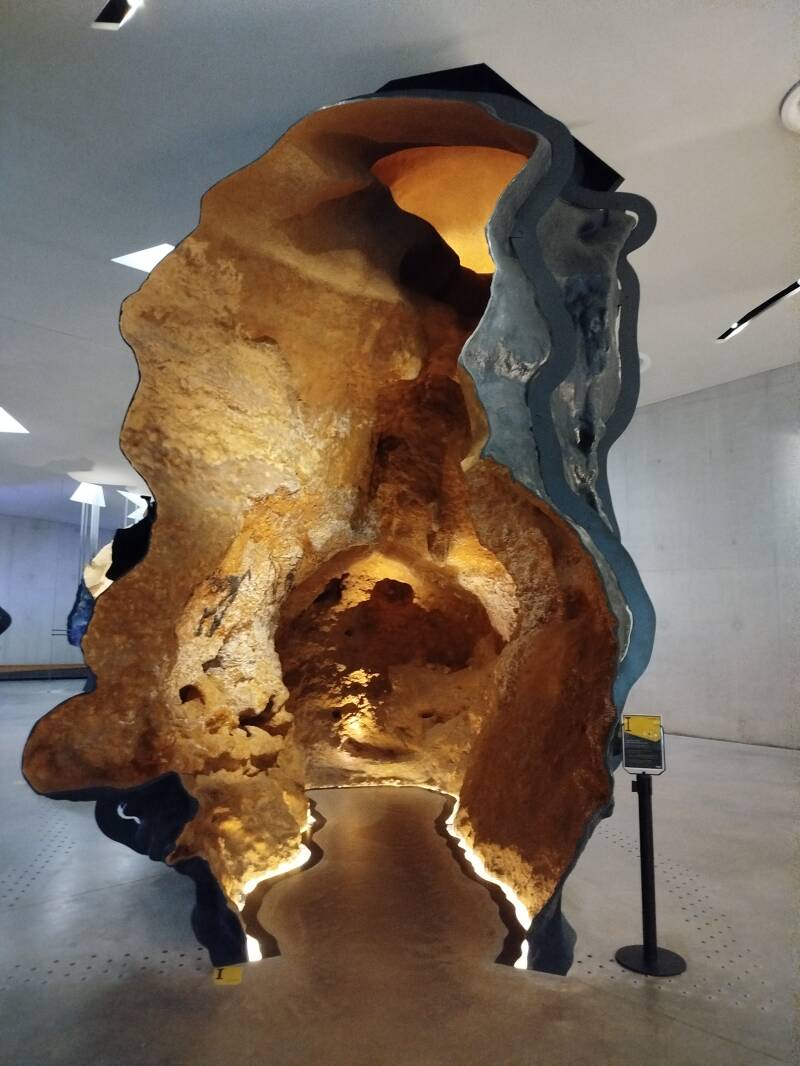
There are 3D models of the cave’s complex interior, interactive panels, prehistoric tools and objects, explaining the techniques and meaning of prehistoric art. You don’t just learn about what’s in the cave, but how it was made, and why it still matters.
When you leave, the Dordogne is just as it was — golden, quiet, untamed — but something beneath it lingers: ancient, precise, and quietly astonishing.