

I arrived just before closing. The château stood quiet and almost unreal — pale against the sky, framed by soft pink trees just beginning to bloom. It felt like stepping into a scene that had been waiting there for a long time.
The château is vast and symmetrical, stretching across the landscape like something from a painting. Inside, I only caught a brief glimpse of its endless halls and quiet rooms, but even that was enough to make me come back the next morning.
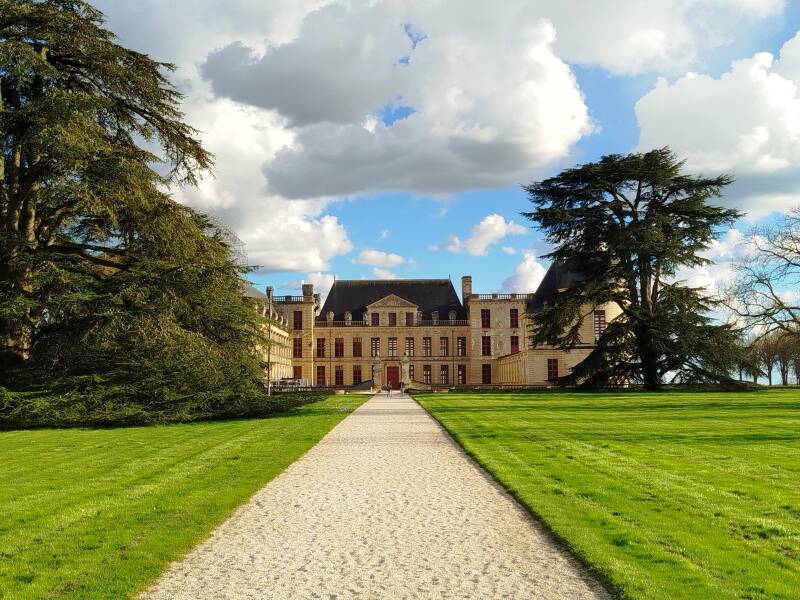
When I came back, the story of Oiron began to unfold. Built in the 16th century, Oiron reflects the elegance of early French Renaissance architecture.
It was commissioned by Claude Gouffier, Grand Écuyer (Master of the King’s Stables) to King Henri II. A question lingers: how could someone with such a courtly — yet secondary — title afford such a magnificent residence? The answer lies in the era’s web of titles, fortunes, and royal favor. Gouffier came from one of the wealthiest noble families in France, and Oiron was both a personal residence and a statement of status.
But what makes Oiron unforgettable today is not just its past. Inside these grand halls lives something far less predictable: contemporary art.

Rather than velvet ropes and arranged period furniture, you enter rooms where imagination has moved in.
The château’s permanent exhibition, Curios & Mirabilia, is a modern-day cabinet of curiosities, bringing together installations from international artists. Some are whimsical, others bizarre — strange creatures, cryptic machines, layered soundscapes — and all set in dialogue with the Renaissance bones of the building.
One of the Renaissance highlights is the Galerie, a 55-meter-long space lined with rare 16th-century murals. These are some of the largest Renaissance paintings preserved in a historic setting, and they seem to echo with stories. But the grandeur doesn’t stop there.
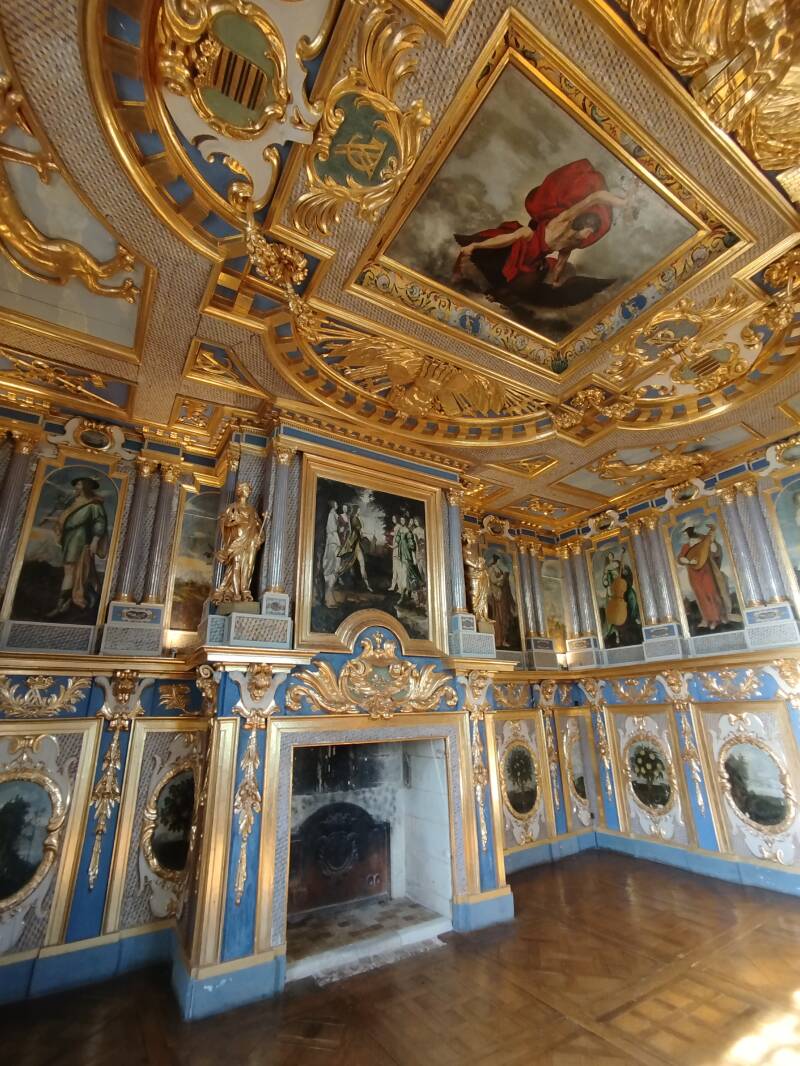
I wandered through a room where the ceiling glowed with deep blue and gold, each panel gilded and carved with dramatic intensity — a theatrical masterpiece above my head. Below it, the walls shone with matching detail: painted panels, golden frames, classical figures, and musical instruments that felt like they might still play.
Another chamber offered a quieter, more solemn splendor: warm red walls, an ornate fireplace, and a ceiling painted with mythological scenes. Every detail was carefully made to impress, and still does.
It’s this mix — old stone and new wonder, solemn beauty and playful curiosity — that makes Oiron stand apart. It’s a castle that invites not only admiration, but interpretation.