

I stood beneath the whale, looking up like everyone else.
And then I stopped moving. Not searching, not scanning — just standing still. That’s when I noticed it.
A small carved ape on a nearby pillar. It wasn’t part of an exhibition, but part of the building itself — easy to miss among everything else.
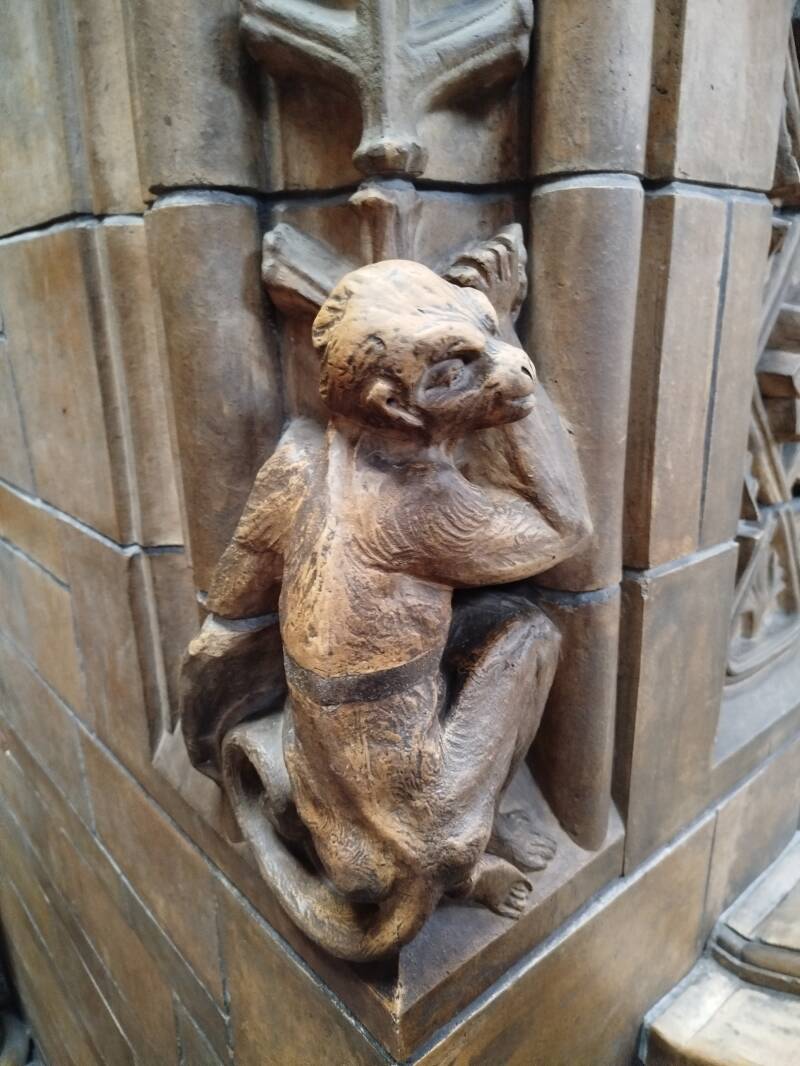

One of many animals hidden in the architecture, designed by Alfred Waterhouse when the museum was built. Living and extinct species quietly woven into columns and walls, easily overlooked. I hadn’t been looking for details. I had simply stood still long enough for one to appear.
In another room, fish emerged in much the same way.

Not an exhibit I had planned to see, but something that caught my eye as I moved on. Brief moments, accidental discoveries — small, almost private encounters inside a place built for spectacle.
The Natural History Museum offers far more than can be absorbed in one visit. Perhaps that is its quiet lesson: not everything reveals itself when you rush. Some things wait to be noticed.